Architect of the Bizen Renaissance: Mori Tōgaku
-

-
Artworks
-
-
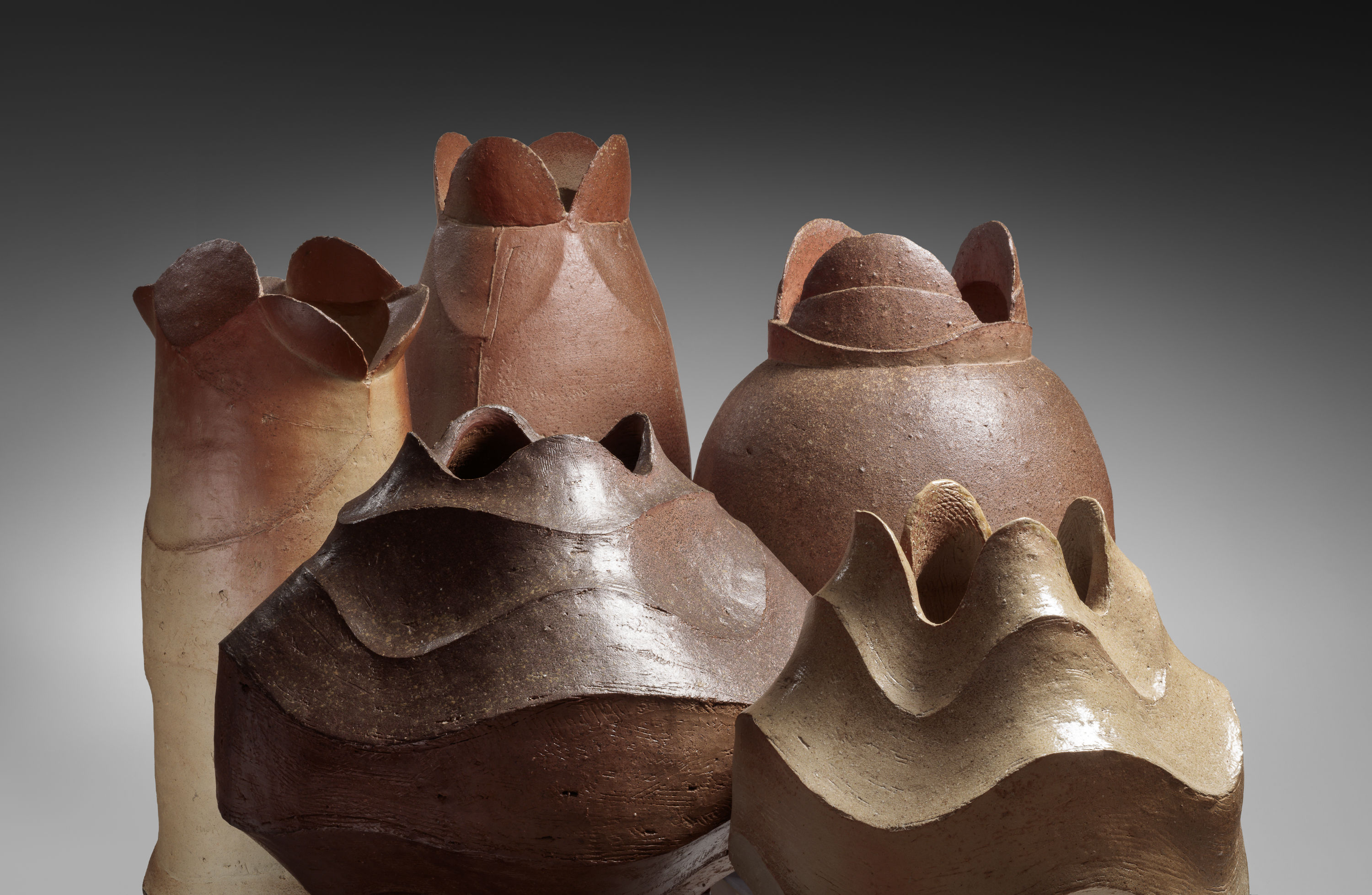
Joan B Mirviss LTD is honored to present, in collaboration with Shibuya Kurodatoen Co. Ltd., Architect of the Bizen Renaissance: Mori Tōgaku. While Mori Tōgaku’s (b. 1937) name has become synonymous in Japan with contemporary Bizen ceramics, Architect of the Bizen Renaissance marks the artist’s first solo show and retrospective outside of Japan. Featuring twenty-three works that span the artist’s career, this exhibition presents the remarkable aesthetic diversity that this master ceramist has been able to achieve within the Bizen tradition.
Mori Tōgaku was born on March 23, 1937, in the town of Imbe, historically part of Bizen Province. His family has been making ceramics there since the Muromachi period (1336–1573), when they were officially designated one of the six Bizen ceramic lineages that established the region’s tradition of unglazed, wood-fired ceramics. A true virtuoso in this challenging and often unpredictable ceramic style, Mori Tōgaku has long impressed Japanese art critics with his mastery of highly coveted surface effects, such as scarlet straw marks (hidasuki) and trailing natural ash glaze reminiscent of sesame seeds (nagare goma), both of which can only be achieved through meticulous wood-firing. Mori has spent decades avidly researching historical sherds and kiln sites for clues about historical firing techniques. His efforts to reconstruct the communal Great Kilns used by medieval Bizen ceramists have become a central component of his artistic legacy. Since 1980, Mori has constructed several climbing Great Kilns, including the 53-meter-long Sabukaze Great Kiln and the 85-meter-long New Sabukaze Great Kiln. In this exhibition, we are delighted to present works that were fired in these magnificent kilns.
Mori combines his unrivaled technical prowess with a keenly contemporary and sculptural sense of form. His curvilinear Banded Pattern vessels undulate with dynamic rhythm, while the sharp angles of his geometrically faceted vessels cast intriguing shadows across the surface of his clay. Earlier in his career, he also experimented with techniques not typically employed in Bizen ceramics, such as nerikomi marbleization and oxidized silver or platinum surface decorations, both of which he typically applied to low-fired earthenware. The resulting soft and porous texture of these works is reminiscent of ancient objects unearthed in an archeological dig, imbuing a sense of timelessness to these more experimental designs.
A truly unique ceramic artist, Mori Tōgaku has used his deep knowledge of Bizen ceramic techniques to bring an entirely contemporary expression of Bizen to life. Architect of the Bizen Renaissance offers a wonderful opportunity to explore the artist’s original approach to clay.
-
-
Publications
-
News
-

Architect of the Bizen Renaissance highlighted in Ceramics Monthly
Spotlight on two works by Bizen master Mori Tōgaku (b. 1937) June 1, 2026Ceramics Monthly featured our exhibition, Architect of the Bizen Renaissance: Mori Tōgaku , in the Exposure section of their June/July/August 2026 issue. The feature highlights...Read more -

Architect of the Bizen Renaissance: Mori Tōgaku featured in ArtDaily
Our exhibition, Architect of the Bizen Renaissance, was recently featured in ArtDaily! May 11, 2026To view the feature, click here _____________________ NEW YORK, NY .- This May, Joan B Mirviss LTD presents, in collaboration with Shibuya Kurodatoen Co. Ltd.,...Read more -

Architect of the Bizen Renaissance: Mori Tōgaku featured in InfoCerámica
Our exhibition, Architect of the Bizen Renaissance: Mori Tōgaku, was recently featured in InfoCerámica, an online Spanish-language ceramics magazine! May 5, 2026To view the feature, click here ___________________ La galería neoyorquina Joan B. Mirviss LTD presenta durante hasta el 26 de junio esta exposición titulada “Arquitecto...Read more
-
-
Artist