
Branching Out: Kaneshige Family and Bizen Tradition I Miwa Family and Hagi Tradition
-
-
The widespread popularity and distinguished reputations that Japan's ancient ceramic traditions enjoy today are largely indebted to a core group of mid-twentieth century artistic visionaries: among them, Kaneshige Tōyō (1896-1967) for Bizen ware and Miwa Kyūwa (1895-1981) for Hagi ware. Both men were inheritors to their highly esteemed, long-established, multi-generational family names that had been associated with excellence in their respective ceramic traditions for centuries. Together with scholar-potter Kawakita Handeishi (1878-1963), they co-founded the artistic discussion group Karahinekai in 1942, formed of artists who were dedicated to the recovery of lost techniques from the golden age of ceramics during the 16th century Momoyama period.
With a focus on teaware and vessels, they were wildly successful in their endeavors. Adapting their production, greatly expanding their styles, and influencing their brothers, sons, and grandchildren, they definitively transformed their family's legacy from that of dutiful craftsmen to boldly modern artists. Joan B Mirviss LTD's latest exhibition celebrates the past, present, and future of these two prominent families synonymous with excellence in BRANCHING OUT: KANESHIGE FAMILY AND THE BIZEN TRADITION and MIWA FAMILY AND THE HAGI TRADITION.
Named after the main city of Yamaguchi Prefecture, "Hagi" refers to a ceramic tradition that emphasizes the exquisitely lovely natural qualities arising from a very special interaction between unique clay and a soft, transparent yet creamy glaze. The Miwa family's association with Hagi ware dates to its origins in 1600s Japan, when the very first Miwa Kyūsetsu served as potter under the patronage of the local daimyo. Even older is the thousand-year-old "Bizen" tradition, one of the six ancient kilns of Japan centered around Imbe village (or Bizen) in Okayama Prefecture. The Kaneshige family has long been tied to the place of Bizen and to producing this distinctive wood-fired ware.
Though they appear different, both Hagi and Bizen styles' merits lie in the alchemy of subtleties: of precise clay blends, unexpected textures, and marvelous color transformations. Hagi ware's warm, orange clay body peeks through a ladled transparent glaze that incompletely covers the surface in a white or pink-ish white veil, with no additional underpainting or decoration. Characterized by a reddish-brown body that can at times turn a slate or bluish-gray, Bizen ware utilizes no applied glaze at all. Fired just once over a very long time, ranging from one week to one month, Bizen ware's enchanting surface patterning and texture result entirely from natural effects occurring within the kiln.
This exhibition traces that time-honored legacy, of earth plus fire, down to the most recent generations of the Kaneshige and Miwa families:
Kaneshige Tōyō
Miwa Kyūwa (Kyūsetsu X)
Kaneshige Sozan (1909-1995)
Miwa Jusetsu (Kyūsetsu XI) (1910-2012)Their children have in turn blossomed on this crowded, complicated family tree:
Miwa Kyūsetsu XI's three sons—Kyūsetsu Ryūkishō (Kyūsetsu XII/Ryōsaku) (b. 1940), Eizō (1946-1999), and Kyūsetsu XIII (Kazuhiko) (b.1951)—have each discovered thought-provoking and experimental new approaches to their patrimony, ranging from playful and erotic to architectural or figurative.
Kyūsetsu XII's daughter, Miwa Hanako (b. 1972), brings her unique sensibility to the family tradition.Kaneshige Tōyō's first and third sons, Michiaki (1934-1995) and Kōsuke (b. 1943), have continued to push Bizen's boundaries, through greater abstraction and provocative sculptures.
Kaneshige Sozan's first and third sons, Makoto (b. 1945) and Yūhō (b. 1950), have further elaborated the Bizen tradition in teaware, creating extraordinary vessels with hidasuki (fire-cording) effects that were ingeniously recovered by their father.
Both Hagi and Bizen styles’ merits lie in the alchemy of subtleties: of precise clay blends, unexpected textures, and marvelous color transformations.
Each artist has taken foundational aspects of their family's style and made his individual imprint on centuries-old tradition, thereby pushing its boundaries both outward and forward. Our exhibition covers the range of interpretations that have moved these ancient traditions into contemporary clay art. -
Installation Shots
-
-
Publications
-
News
-
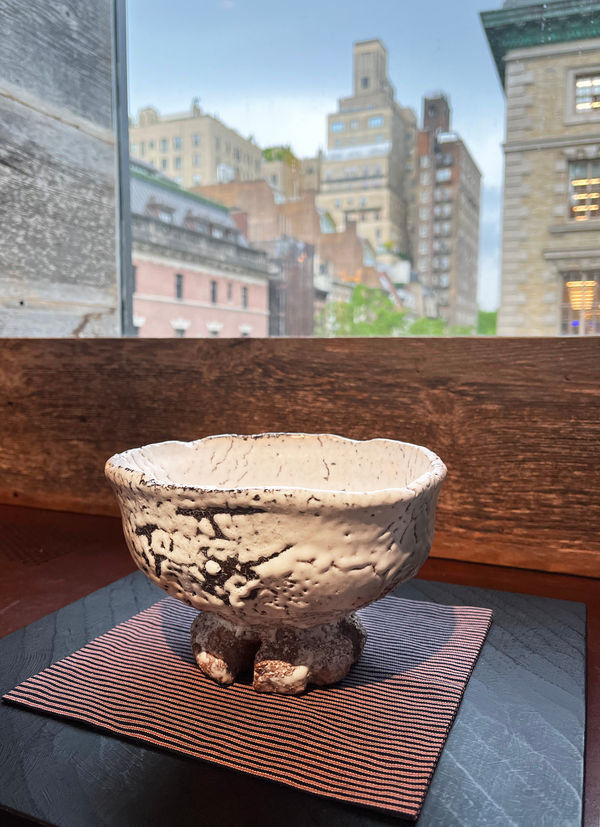
Bizen and Hagi ware exhibition featured in Ceramics Now magazine
BRANCHING OUT: The Kaneshige and Miwa Families June 20, 2022The latest exhibition at Joan B Mirviss LTD featuring the Bizen tradition and the illustrious Kaneshige family, alongside the Hagi tradition and the prominent Miwa...Read more -

Branching Out opens at Joan B Mirviss LTD
A closer look at the Bizen and Hagi traditions May 19, 2022Adapting their production, greatly expanding their styles, and influencing their brothers, sons, and grandchildren, patriarchs Kaneshige Tōyō and Miwa Kyūwa (Kyūsetsu X) definitively transformed their...Read more -
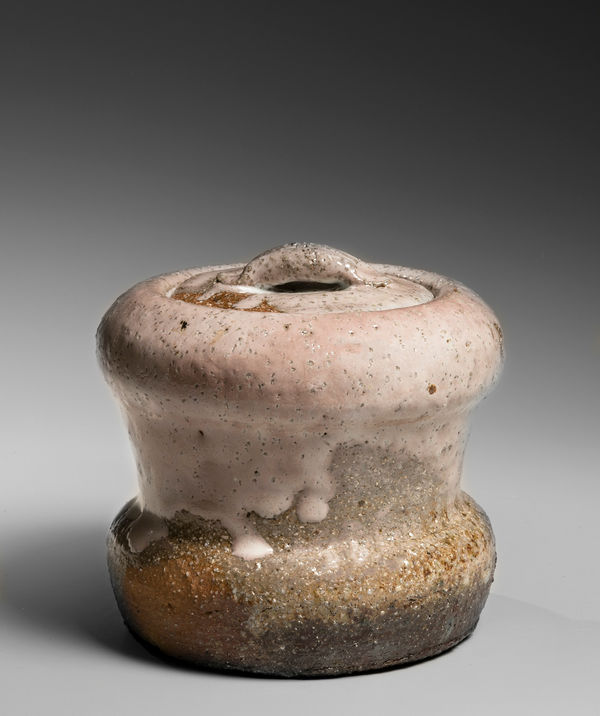
Duo helped revive the golden age of Japanese ceramics
Antiques Trade Gazette features the latest exhibition of Bizen and Hagi ware May 14, 2022The Bizen ware of Kaneshige Tōyō (1896-1967) and the Hagi ware of Miwa Kyūwa (1895-1981) star at 'Branching Out', an exhibition at Joan B Mirviss...Read more -
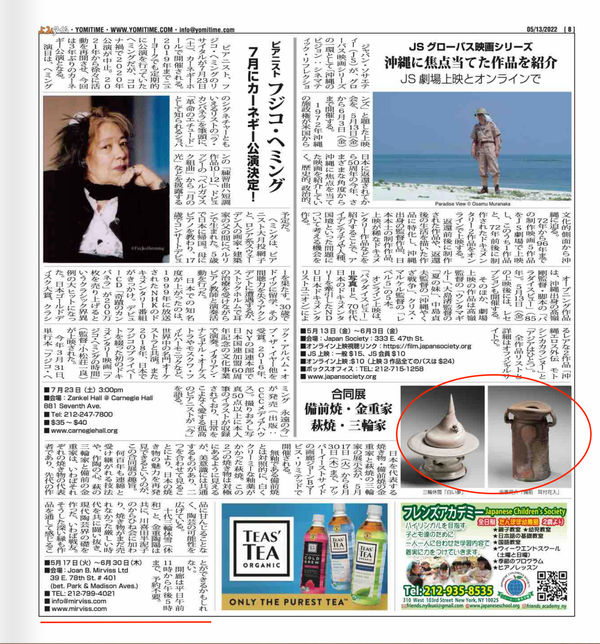
Kaneshige and Miwa families continue their ancient ceramic traditions
May 13, 2022The latest issue of Yomitime features Joan B Mirviss LTD's upcoming exhibition, Branching OutRead more -
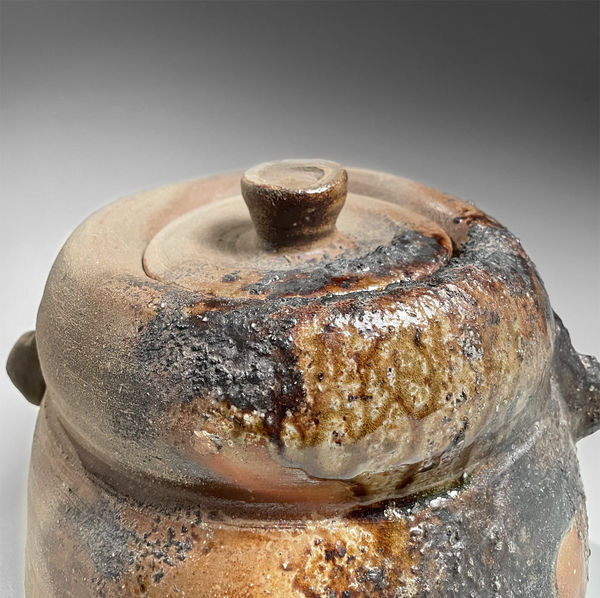
Latest exhibition features Bizen and Hagi ware
The Kaneshige and Miwa families take center stage in Branching Out May 6, 2022Joan B Mirviss LTD's latest exhibition highlights with introduction and images are now on AsianArt.com ASIANART.COM | May 2022 Exhibitions BRANCHING OUT MIWA FAMILY AND...Read more
-
-
Artist


